Ask a painter up north and he’ll tell you seven to ten years. Down here, that number leaves your house unprotected. Florida paint doesn’t die of old age. The sun, the humidity, and the salt air kill it — and they work every day of the year.
Here’s the schedule I give homeowners from Boca Raton to Miami, the signs I check before I trust any calendar, and why the prep work matters more than the paint itself.
Key takeaways
- Most South Florida stucco homes need an exterior repaint every five to seven years. Wood trim goes sooner, fiber cement lasts longer — and a house in full sun or salt air lands on the short end of every range.
- Go by the signs, not just the years: chalk on your hand when you rub the wall, fading, peeling, mildew, and hairline stucco cracks all mean the paint has stopped protecting.
- On stucco, paint is a waterproof seal, not just a color. Once it fails, wind-driven rain gets in — and water damage costs a lot more than a repaint.
- Prep decides how long the new paint lasts: wash, repair the cracks, seal, and prime first. A cheap quote usually skips exactly those steps.
- The easiest painting window in South Florida is late fall through early spring — lower humidity, less rain. Summer jobs can still come out right, but the crew has to work around the afternoon storms.
The short answer, by surface
Stucco — every 5 to 7 years. Stucco is most of what we paint in Palm Beach, Broward, and Miami-Dade. It holds paint well, but our humidity feeds mildew and the sun fades it steadily. Five to seven is the honest range for a quality job done right.
Wood — every 3 to 5 years. Wood siding is rare here, but wood fascia, soffits, and trim are on almost every house, and they fail first. Wood drinks moisture, so once the paint film breaks, peeling and rot move fast.
Fiber cement — every 7 to 10 years. It holds paint longer than stucco. It still fades, and the caulk joints around windows and corners usually need attention before the paint itself gives up.
Painted brick and aluminum — 7 to 10-plus years. These are mostly fade calls, not failure calls. You repaint when the color looks tired, not because the surface is exposed.
One adjustment to all of it: a wall that takes direct afternoon sun, or a house close enough to the ocean to taste the salt, ages faster than the house two streets over in the shade. I look at the worst wall, not the best one.
Why Florida wears paint out faster
Up north, winter gives paint a rest. Here it never rests. UV breaks the paint down at the surface — that’s the chalky powder you see on older homes. Humidity and shade grow mildew in the film. Summer storms drive rain sideways into every hairline crack. And near the coast, salt air works on paint the same way it works on everything else outside.
That’s why the national averages you read online run long for us. They’re written for a climate your house doesn’t live in.
Go by the signs, not just the calendar
When I walk a house, here’s what I check:
- The chalk test. Rub your palm hard on the sunny side of the house. White or colored dust on your hand means the surface is breaking down — and new paint won’t stick to it without sealing first.
- Fading you can prove. Peek behind a shutter or a downspout. If the hidden paint is a different color than the wall around it, the sun has been winning for a while.
- Peeling, bubbling, or cracking. That’s not cosmetic anymore. That’s open doors for water.
- Mildew spotting, especially on shaded north walls and under eaves.
- Hairline stucco cracks and caulk pulling away at windows and doors. Paint bridges small cracks; it can’t bridge neglect.
If two or three of those are showing, you’re due — whatever year the calendar says.
On stucco, paint is a seal — not just a color
This is the part homeowners underestimate. A stucco wall with sound paint sheds water. The same wall with chalked, cracked paint absorbs it, storm after storm. That water is what stains interiors, swells trim, and turns a maintenance job into a repair job.
Repainting on schedule is the cheap version of that story. It’s the same reason I tell people to stay ahead of their roof decisions: in Florida, maintenance you choose is always cheaper than damage that chooses you.
What makes the next paint job last
The paint is the last step, not the job. On our exterior painting work in Boca Raton, the sequence is: pressure wash and treat the mildew, scrape and sand anything failing, repair stucco cracks and re-caulk the joints, seal chalky surfaces, and prime bare spots. Then two coats of a premium 100% acrylic exterior paint — elastomeric on stucco where the wall calls for it.
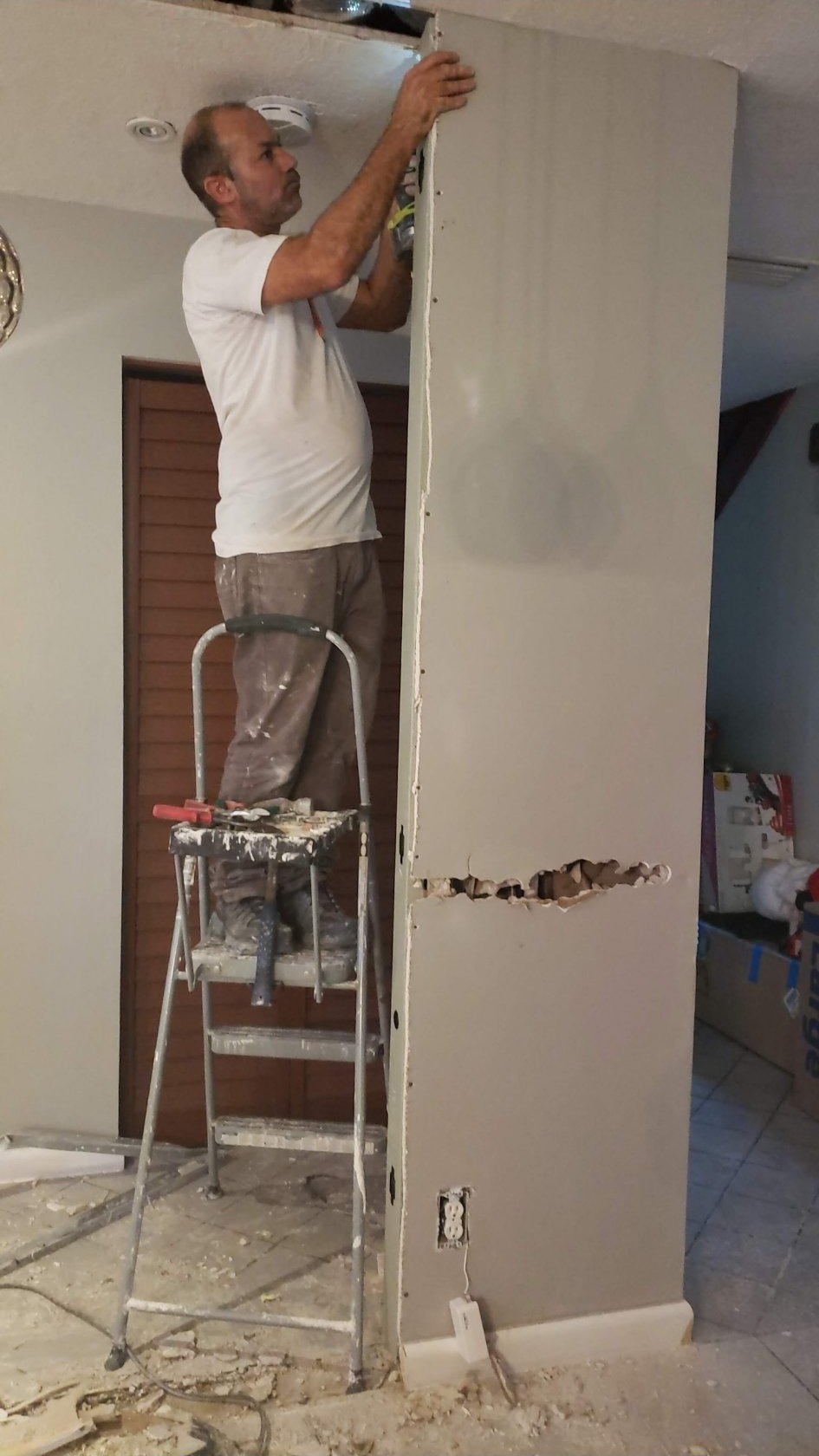
Skip the front half of that list and the best paint in the store still fails early. That’s what a suspiciously cheap painting quote usually is: the prep, deleted.
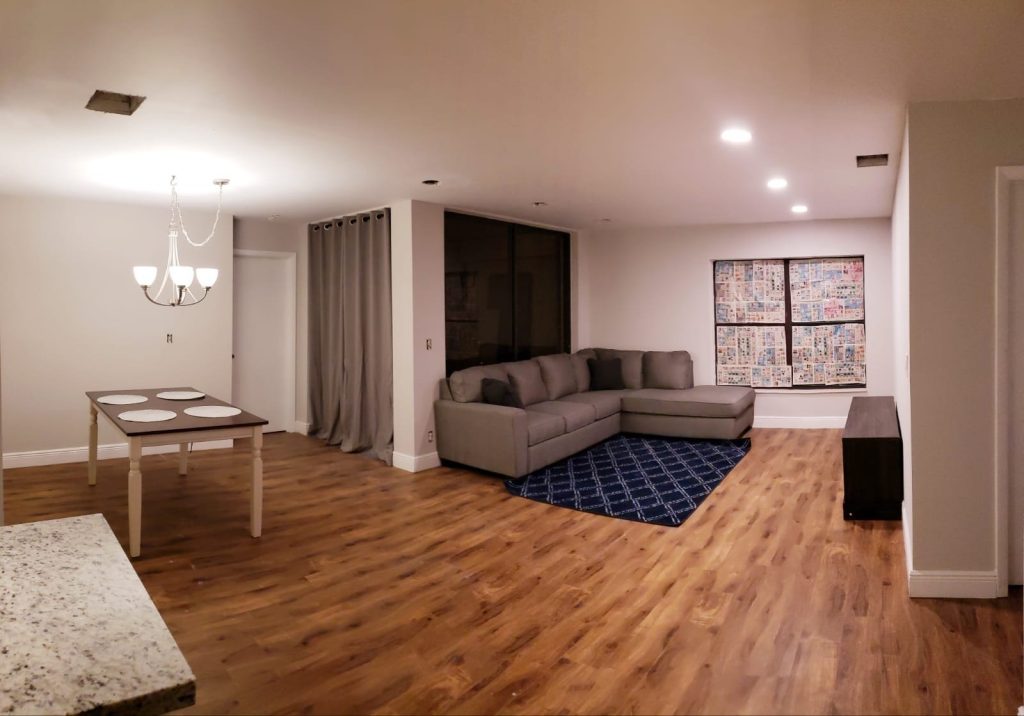
The same rule runs inside the house. The photo at the top of this post is one of our interiors at the final paint stage — look at the windows, masked with paper before the last coat went on. Protection and prep are the job, whether it’s a stucco wall or a living room. It’s how we approach interior renovations too: the finish only looks good because of everything that happened before it.
What it costs
I won’t quote your house from a blog post, because the number lives in the prep: the size and height of the home, how much stucco repair and caulking it needs, the quality of paint, and whether you’re changing colors. What I can tell you is where the money goes — and that the free estimate I do in person prices your actual walls, not an average house.
If it helps the planning: financing is available through Acorn Finance — small jobs from $120/month, typical projects in the low $200s–$300s/month, with rates as low as 4.49% APR — always with approved credit.*
FAQ
Can I just paint over peeling paint? You can, and it will peel again — usually within a year, taking the new coat with it. Failed paint has to come off and the surface sealed before new paint goes on. Painting over a failing surface is paying for the same job twice.
What is the best time of year to paint a house exterior in South Florida? Late fall through early spring: lower humidity, less rain, paint cures the way it should. Summer work can still turn out right — we start after the morning dew dries and plan around the afternoon storms — but the dry months are simply easier on the paint.
Do I need HOA approval to repaint or change my exterior color? In many South Florida communities, yes — especially for a color change. Get the approval in writing before the first gallon is opened. Showing up with the wrong color already on the wall is an expensive conversation.
One coat or two? Two. One coat covers; two coats protect. On a color change or a chalked, sealed surface, two finish coats over the primer are what get you to that five-to-seven-year mark instead of year three.
Not sure if you’re due?
Rub the sunny wall. If your hand comes away chalky, call me and I’ll walk the house with you — free estimate, honest answer, and I’ll tell you if you can wait a year. Onel Construction LLC — Florida Certified General Contractor CGC1511492, serving Palm Beach, Broward, and Miami-Dade counties.
Call me: (561) 462-9293 — or send the details through our contact page and I’ll get you scheduled.
*Price note in my own words: financing payments and any figures here are examples from recent jobs around here — set before the latest round of tariff-driven material price increases. They move with inflation, tariffs, and the market. Your free estimate always uses current numbers.
Financing is available on everything we do. Payments start at $120 a month on smaller jobs, and most projects land in the low $200s to $300s a month with approved credit. Rates run as low as 4.49% APR for qualified buyers. Ask at the free measure and we’ll lay the options out in writing, next to the estimate.
Insurance savings vary by carrier, policy, and home — figures shown are ‘up to’ amounts, not guarantees. Grant eligibility, amounts, and funding availability are determined by the program and may change. Financing subject to lender approval; rates and payments vary by credit profile. All financing examples assume approved credit through our financing partner.