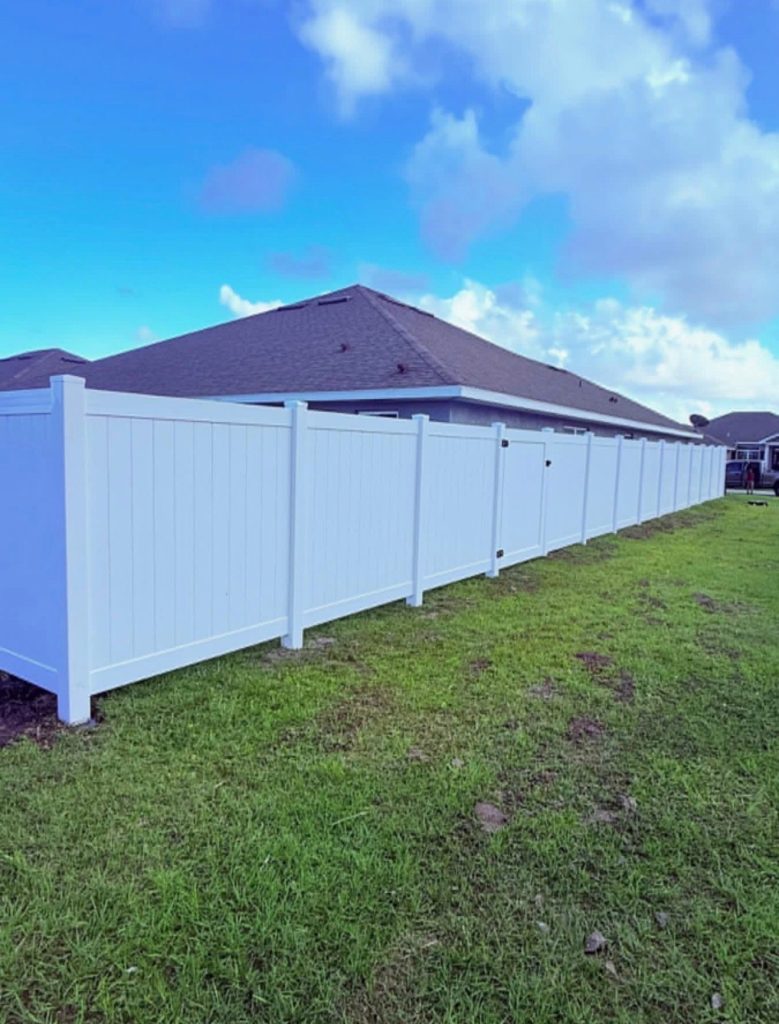
Short answer, because I know that’s why you’re here: in most South Florida cities, yes. A brand-new fence — and in a lot of places a full replacement fence — needs a building permit before the first post goes in the ground. Homeowners are surprised by that every week. A fence feels like a yard project, not a construction project. The city sees it differently, and honestly, once you hear why, it makes sense.
I’m Joe, I run Onel Construction out of Boca Raton, and fences are a regular part of my work across Palm Beach and Broward. Here’s exactly what the permit is for, what the city usually wants from you, and what happens if you skip it and hope nobody notices.
Key takeaways
- In most South Florida cities, a new or fully replaced fence requires a building permit — the rules are set city by city, not by one statewide fence law.
- The permit is mostly about location and safety: the fence has to sit on your property, respect setbacks and easements, stay under the height limit, and — around a pool — meet Florida’s pool barrier code.
- A survey or site plan is usually part of the application. Guessing your property line is how fences end up getting moved at the owner’s expense.
- HOA approval is separate from the city permit. You can need both, and one does not replace the other.
- An unpermitted fence can draw fines, a stop-work order, or a forced removal — and it often surfaces at the worst time, when you go to sell the house.
What the permit actually covers
The city isn’t grading how pretty your fence is. It’s checking four things. First, where it sits — on your land, not your neighbor’s, and not inside a utility or drainage easement where a crew may need access later. Second, how tall it is — most residential codes cap backyard fences at about six feet and front-yard fences lower, but the exact number is your city’s, not mine. Third, corner-lot sight lines — a solid fence on a corner can’t block a driver’s view of the intersection. Fourth, wind and structure — posts set deep enough and built well enough that your fence stays your fence in a storm, instead of becoming debris in one.
That last one matters down here. I wrote about how material choice plays into storm performance in my post on how long a vinyl fence lasts in Florida — a permitted job gets those details checked before the weather tests them for real.
What you usually have to submit
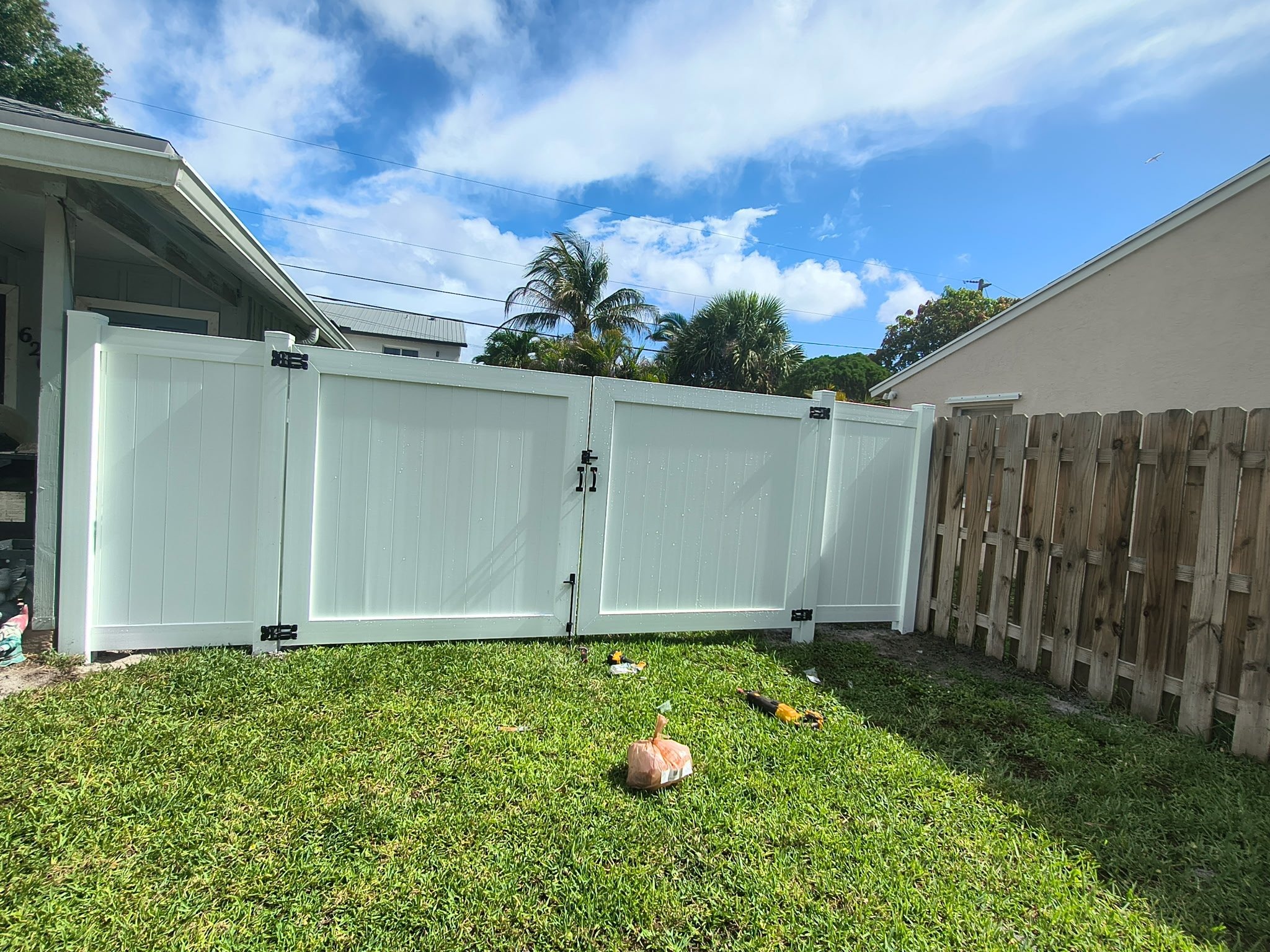
Every city has its own forms, but the package I put together normally includes a survey or site plan showing the fence line, height and material, gate locations, and setbacks. If there’s a pool, the plan also has to show the fence as the pool barrier — in Florida, at least 48 inches high with self-closing, self-latching gates that open away from the pool. That’s state safety code, and inspectors do not bend on it, because it’s about kids, not paperwork.
One warning on surveys: if yours is old, missing, or you don’t know where the line is, settle that before we measure. Moving a finished fence six inches costs far more than a survey ever will.
Repairs are different from replacements
This is where I see homeowners get tripped up. Replacing a few damaged pickets or panels in the same fence, in the same place, at the same height, is generally treated as a repair — most cities don’t ask for a permit for that. Tearing the whole fence out and putting a new one up, even on the exact same line, is generally a replacement, and most cities do want a permit for it. The line between the two isn’t always obvious, which is exactly why I check with the building department before the work starts instead of arguing about it after.
What happens if you skip the permit
Maybe nothing — for a while. Then a neighbor complains, a code officer drives by, or you list the house and the buyer’s side asks for permit history. Then you’re looking at fines, an after-the-fact permit that costs more than the original would have, or in the worst case, taking the fence down. Skipping it never saves money in the end. It just moves the bill to a worse day — and if that unpermitted fence is ever part of a pool accident or a storm claim, you do not want to explain to an insurance company why the barrier around your pool was never inspected.
Who pulls the permit?
On my jobs, we do. That’s part of what you hire a licensed contractor for — I handle the application, the site plan, and the inspection, and the permit sits under Onel Construction LLC, License CGC1511492. Our fence services in Boca Raton page walks through how we run a fence job from the first measurement to the final walk. Can a homeowner pull their own fence permit? In many cities, yes, as an owner-builder — but then the responsibility, the corrections, and the inspection calls are yours, start to finish.
Get your fence priced — and permitted — the right way
If you’re thinking about a new fence, a replacement, or a pool fence that has to pass code, call me at (561) 462-9293 or reach me at https://onelconstruction.com/contact-us/ and I’ll come out, measure it, check your city’s rules, and put the whole thing — fence, permit, and gates — in writing before we start.
Financing is available on everything we do. Payments start at $120 a month on smaller jobs, and most projects land in the low $200s to $300s a month with approved credit. Rates run as low as 4.49% APR for qualified buyers. Ask at the free measure and we’ll lay the options out in writing, next to the estimate.
— Joe, Onel Construction LLC, License CGC1511492, Boca Raton, FL
Prices are averages from recent jobs, set before the latest round of tariff-driven material price increases, and subject to change with inflation, tariffs, and market conditions. Your free estimate always uses current numbers.
FAQ
Q: How long does a fence permit take in South Florida?
A: It depends on the city and how clean the application is. A complete package with a clear survey usually moves in days to a few weeks; a missing survey or a correction round adds time. It’s one more reason to start the paperwork before you schedule the install, not after.
Q: Do I need HOA approval if I already have a city permit?
A: Yes, if your HOA requires it — and most do. The city permit covers code and safety; the HOA covers their rules on material, color, and height. One approval does not substitute for the other.
Q: Does a pool fence have different rules?
A: Yes. A fence serving as a pool barrier in Florida has to be at least 48 inches high, with self-closing, self-latching gates that swing away from the pool. Those are state safety requirements, and the final inspection checks them.
Q: Can I build the fence right on my property line?
A: Often the fence can sit on or just inside the line, but easements, setbacks, and your city’s rules control the exact placement — which is why the survey matters. Never build on a guessed line.
Insurance savings vary by carrier, policy, and home — figures shown are ‘up to’ amounts, not guarantees. Grant eligibility, amounts, and funding availability are determined by the program and may change. Financing subject to lender approval; rates and payments vary by credit profile. All financing examples assume approved credit through our financing partner.