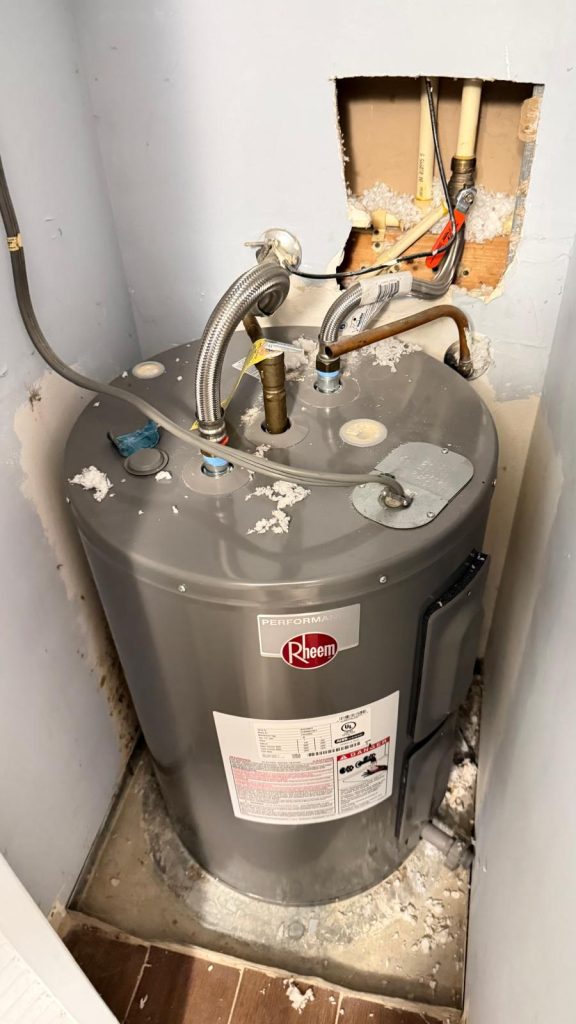
Short answer: yes. And I know that’s not what you wanted to hear when your shower just went cold.
I’m Joe, I run Onel Construction out of Boca Raton, and I handle plumbing work across Palm Beach, Broward, and Miami-Dade. A water heater looks like a simple swap — old tank out, new tank in — so homeowners ask me why the city needs to be involved at all. Here’s the straight answer, what the permit actually covers, and what happens if you skip it.
Key takeaways
- Yes — replacing a water heater in Florida requires a plumbing permit, even when the new unit goes in the exact same spot as the old one.
- A licensed contractor normally pulls the permit and schedules the inspection. If a quote never mentions a permit, that is a question to ask before you sign.
- The inspection is a safety check, not paperwork for its own sake: relief valve and discharge line, drain pan, shutoff, venting on gas units, and expansion control where the system needs it.
- Skipping the permit can surface later — at a home sale, an insurance claim, or when the next contractor finds work with no record behind it.
- Tankless is not a shortcut around the rule. Converting to tankless can add gas or electrical work, which can mean additional permits and inspections.
Why a water heater needs a permit at all
Section 105.1 of the Florida Building Code requires a permit to install, alter, or replace a plumbing system, and a water heater is part of that system. Cities here apply it directly: a residential or commercial water heater installation or replacement needs a plumbing permit issued before the work is done.
The reason is safety, not revenue. A water heater holds pressurized hot water, connects to gas or high-voltage electric on many homes, and has a temperature-and-pressure relief valve that has to discharge somewhere safe. Installed wrong, it can leak for months inside a wall or garage, scald, or — in the rare worst case — fail under pressure. The permit puts a second set of trained eyes on those exact points.
That is also why this job sits on the licensed side of the line I explain in my post on whether to hire a plumber or a handyman. A handyman can hang a picture. A water heater changeout is permitted plumbing work.
Who pulls it, and what the process looks like
On my jobs, we pull it. The licensed contractor submits the permit application for your city or county, lists the unit being installed, and schedules the inspection after the work. In parts of Broward, the application uses the county uniform form and a water-heater supplement; a tankless job can also need an electrical sub-permit from a licensed electrical contractor. If the job value crosses your city’s threshold, a recorded notice of commencement may be required before the first inspection.
Some cities allow an owner-occupant to pull a permit as an owner-builder. That path exists, but understand what it means: you take on the contractor’s responsibility for code compliance. If the install fails inspection, it’s yours to fix. Most homeowners I talk to would rather that responsibility sit with the licensed crew doing the work — that’s part of what you’re paying for.
Timing matters too. A straightforward like-for-like tank swap is usually a same-day install once it’s scheduled, with the inspection following after. A conversion — tank to tankless, electric to gas, or moving the unit — takes longer, because the gas, venting, or electrical work has to be planned, not improvised.
What the inspector actually checks
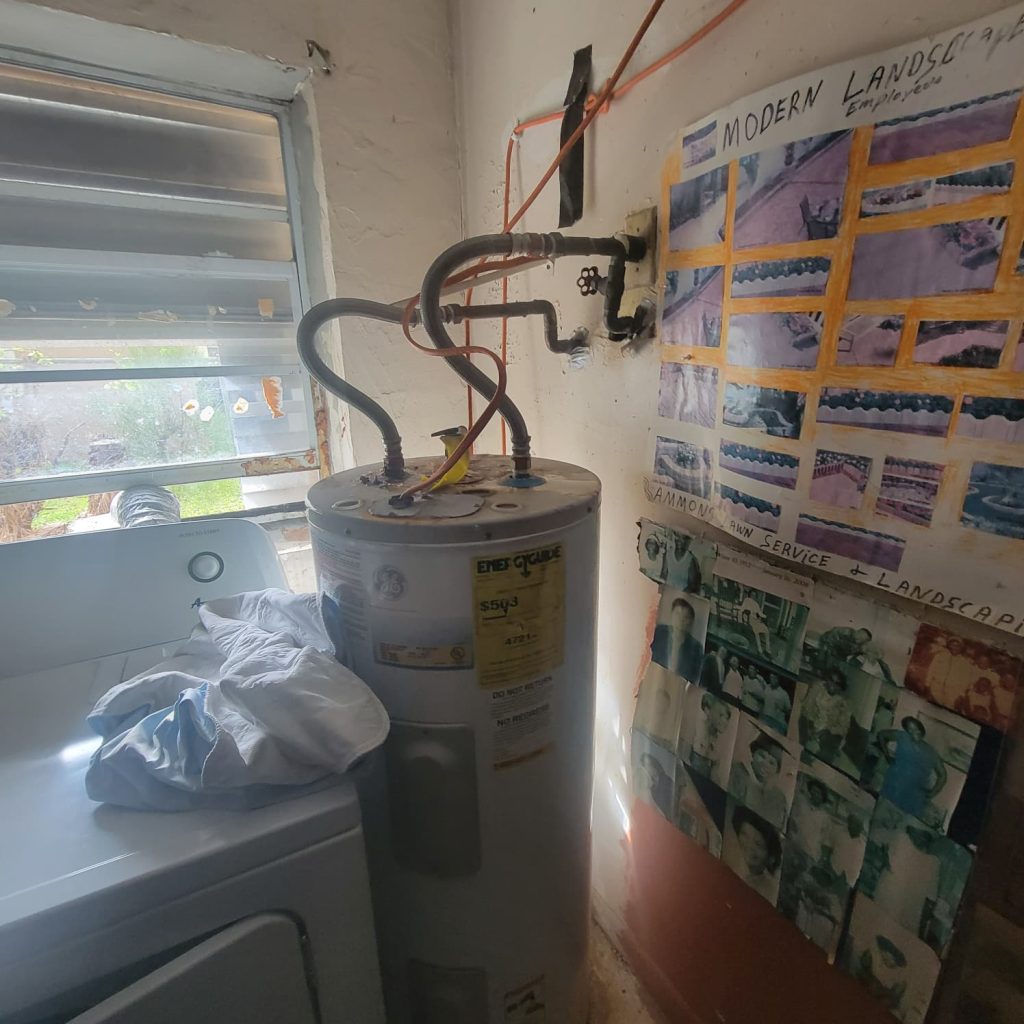
The inspector isn’t grading how pretty the pipes look. He’s checking the things that keep you safe: a working shutoff valve, a temperature-and-pressure relief valve piped to a safe discharge point and not capped or trapped, a drain pan where one is required, proper clearance and working space, and — on gas units — combustion air, secure venting, and clearances from combustibles. On closed plumbing systems, he’ll look for expansion control so pressure has somewhere to go when the water heats up.
If something fails, you fix that item and call for a re-inspection. That’s not a disaster. That’s the system working the way it should, before a small miss becomes a leak or a warranty fight.
You can see how we handle permitted plumbing work on our plumbing services in Boca Raton page.
What skipping the permit can cost you
Picture this: you pay cash for a fast, no-permit swap because you need hot water tonight. Two years later you sell the house, and the buyer’s inspector asks for the permit record nobody has. Or a supply line lets go, water damages the garage, and your insurer starts asking whether the heater was installed to code. I didn’t invent those headaches — they’re the usual way unpermitted work comes back.
Add the warranty angle: manufacturers expect installation to the code and their instructions. An undocumented install gives everybody an excuse to point at somebody else. The permit fee is the cheap part of this job. The expensive part is redoing trust after the fact.
On cost, I’ll tell you what I tell homeowners in person: get the full price in writing, with the permit and haul-away of the old unit included, before work starts. If financing helps, small jobs start at $120/month and typical projects land in the low $200s–$300s/month with approved credit, at rates as low as 4.49% APR with approved credit through Acorn Finance.*
*Prices are averages from recent jobs, set before the latest round of tariff-driven material price increases, and subject to change with inflation, tariffs, and market conditions. Your free estimate always uses current numbers.*
Get a straight answer on your water heater
If your heater is leaking, rusting at the base, rumbling, or just past its prime and you’re not sure whether you need a replacement — or what permits your city will want — call me at (561) 462-9293 or reach me at https://onelconstruction.com/contact-us/ and I’ll tell you plainly what’s required, in writing, before any work starts.
Financing is available on everything we do. Payments start at $120 a month on smaller jobs, and most projects land in the low $200s to $300s a month with approved credit. Rates run as low as 4.49% APR with approved credit. Ask at the free measure and we’ll lay the options out in writing, next to the estimate.
— Joe, Onel Construction LLC, License CGC1511492, Boca Raton, FL
FAQ
Q: Is a permit required if I’m replacing a water heater with the exact same size and type? A: Yes. Like-for-like does not remove the permit requirement in Florida. The replacement still has to be installed to current code and inspected — codes for pans, relief discharge, and expansion control may have changed since your old unit went in.
Q: Can I replace my own water heater in Florida? A: Some cities allow an owner-occupant to act as owner-builder and pull the permit themselves, but you assume legal responsibility for meeting code and passing inspection, and the exemption does not apply the same way to condos, rentals, or commercial property. If gas or new electrical work is involved, I strongly recommend licensed pros for those parts.
Q: Does a tankless water heater need a permit too? A: Yes — and often more than one trade is involved. A tankless conversion can require gas sizing, venting changes, and electrical work, each of which can carry its own permit or sub-permit and inspection.
Q: How long does the permit and inspection add to the job? A: For a standard tank changeout, the install itself is usually same-day and the inspection is scheduled after. The permit application is handled before the work by whoever pulls it — on my jobs, that’s us, so you aren’t standing in line at the building department.
Insurance savings vary by carrier, policy, and home — figures shown are ‘up to’ amounts, not guarantees. Grant eligibility, amounts, and funding availability are determined by the program and may change. Financing subject to lender approval; rates and payments vary by credit profile. All financing examples assume approved credit through our financing partner.