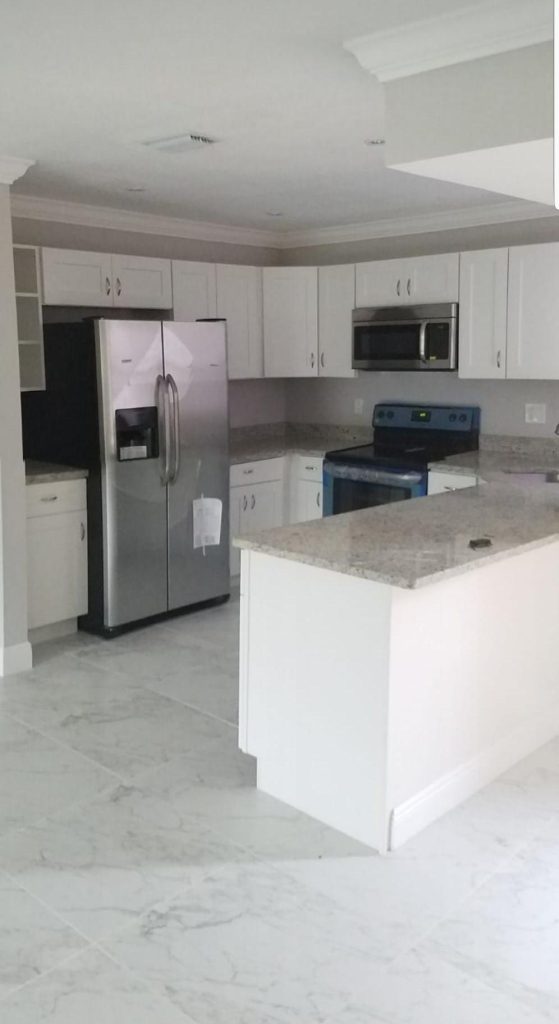
Every kitchen remodel, somebody asks me this. They found cabinets online for less than my quote, or a tile sale at a big-box store, and they want to know: “Joe, what if I buy the materials and you just install them?”
I get it. The math looks simple — my material line minus the sale price equals money saved. Sometimes it even works. But most of the time, the savings are real only on paper, and the difference shows up later as a damaged delivery, a wrong part, a stalled crew, or a warranty nobody honors. Here is how I break it down honestly, including the things you’re fine buying yourself.
Key takeaways
- When I supply a product and install it, one call fixes any problem with it — product or workmanship. When you supply it, a failure starts a finger-pointing match between the seller and the installer.
- The big risks of buying your own are wrong quantities, wrong specs, freight damage, and delays — and each one lands on your schedule and your wallet, not the seller’s.
- Safe to buy yourself: cabinet pulls and knobs, decorative light fixtures, a mirror, accessories — small, personal, replaceable items we agree on in advance.
- Leave to me: cabinets, tile and flooring, stone, rough plumbing and electrical parts, and waterproofing — anything measured, cut, ordered in quantity, or buried behind a wall.
- Decide who buys what before the contract is signed, and get that list in writing. Surprises in the middle of demo are where budgets die.
The real problem with owner-supplied: the warranty splits in two
This is the part nobody thinks about until something fails. If I supply a faucet and it leaks six months later, that’s my problem, start to finish — I deal with the manufacturer, I send my plumber, you make one phone call. If you supplied that faucet, the manufacturer can say it was installed wrong, and the installer can say the product was defective, and you’re standing between them holding a dripping cabinet.
Same with cabinets. A door arrives warped on a kitchen I supplied, and I reorder it on my account while the job keeps moving. A door arrives warped on cabinets you ordered, and now you’re arguing with a freight company and a website’s returns department while my crew is standing in your kitchen with nothing to hang. I can install what you buy — but I can’t warranty a product I didn’t sell you, and I can’t absorb the schedule cost when it shows up wrong. That’s not a policy to protect me. It’s just where the responsibility actually sits.
The other three traps: quantity, damage, and timing
Quantity. Tile and flooring aren’t bought by the square foot of the room. They’re bought with waste factor for cuts, breakage, and pattern matching — usually 10 to 15 percent over — and from the same dye lot, because the “same” tile from a different run can be a visibly different color. Cabinets need filler strips, toe-kick, crown, and hardware counted to the piece. Under-order and the job stops mid-install; over-order and you’re storing boxes you can’t return because the sale was final.
Damage. Cabinets and stone travel by freight, and freight is rough. When I order, inspecting the delivery and fighting the damage claim is my Tuesday, not yours. When you order, that pallet lands in your driveway and the claim window starts ticking whether you’re ready or not.
Timing. A remodel runs on sequence: cabinets before counters can be templated, counters before the sink and faucet go in. I order against that sequence and store material until the day it’s needed. Owner-supplied material tends to arrive all at once, live in the garage for a month, and still somehow have one critical piece on backorder the week we need it.
The middle path — what to buy, what to leave to me
Buy these yourself, with my blessing: cabinet pulls and knobs, decorative light fixtures, the mirror, towel bars, a stool set you fell in love with. These are personal, low-risk, and easy to swap if one arrives wrong. Just pick them early, tell me before rough-in if a fixture needs a specific box or valve, and have them on site before the day they’re installed.
Let me supply these: cabinets, countertops, tile, flooring, the sink and faucet that tie into rough plumbing, shower valves and waterproofing, wire, breakers, pipe. Anything that gets measured, templated, cut, ordered by quantity, or sealed behind a finished surface. That’s where my trade pricing, my supplier relationships, and my warranty all live — and where a mistake costs real money instead of an inconvenience.
Appliances sit in between: pick and buy your own if you want — it’s your kitchen and your cooking. Just give me the exact spec sheets before we order cabinets, because the cabinet layout is built around those dimensions, and a range that’s two inches wider than the plan is a redesign, not a swap.
You can see the kitchens this produces on our kitchen remodeling page, and if you’re comparing quotes right now, my post on how to compare kitchen remodel quotes shows how to line up scopes — including who supplies what — before you sign. It pairs with how I run things at onelconstruction.com.
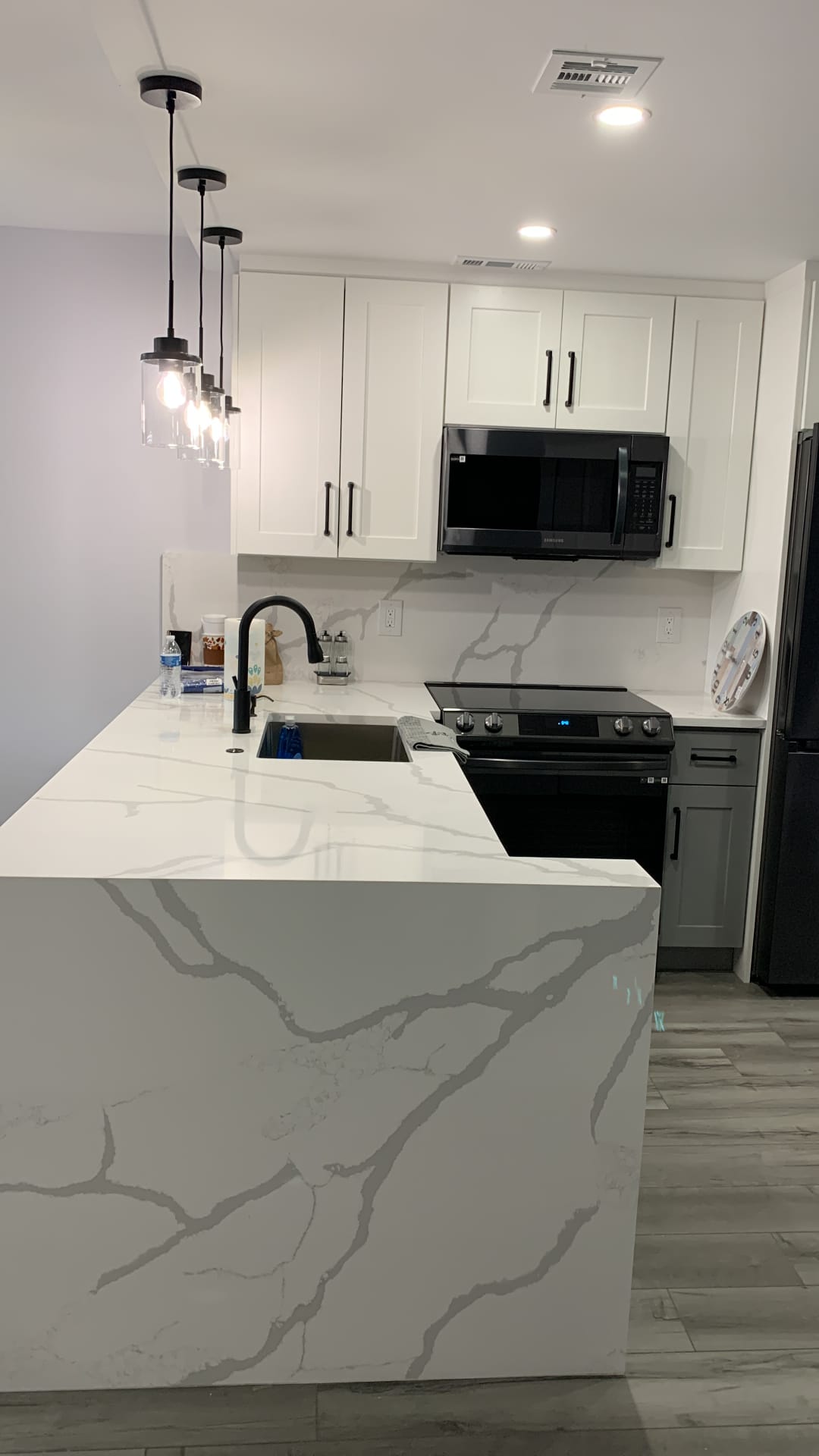
What it does to the budget — honestly
Will my material line sometimes be higher than an online sale price? Yes. That line carries ordering, receiving, inspecting, storing, hauling, warranty handling, and the risk when something arrives broken. It’s not the product marked up in a dark room; it’s the product plus everything around the product. And if the total is the concern, most kitchen remodels we do can be financed — small jobs from $120/month, typical projects in the low $200s–$300s/month, with approved credit, at rates as low as 4.49% APR with approved credit through our financing partner.* Spreading the right job out beats saving a few hundred on materials and paying it back in delays.
Planning a kitchen and not sure who should buy what?
Call or text me at (561) 462-9293 (call/text), or reach us through our contact page. Bring me the list of what you’re thinking of buying yourself and I’ll tell you straight which items are safe, which ones will bite you, and how we’d write it into the contract so there are no surprises either way. That conversation is free.
Onel Construction LLC — a licensed Florida general contracting firm (CGC1511492). Licensed and insured, serving Boca Raton and a 75-mile radius — West Palm Beach to Miami.
*Prices are averages from recent jobs, set before the latest round of tariff-driven material price increases, and subject to change with inflation, tariffs, and market conditions. Your free estimate always uses current numbers.*
FAQ
Will you install cabinets I already bought?
In many cases, yes — if they’re a complete, correct set for the layout. Before we agree, I need to verify the measurements, the fillers and trim pieces, and that nothing is damaged, because once installation starts, a missing or wrong piece stops the job and the fix runs through whoever sold them to you. My labor is warrantied; a product I didn’t supply carries only its manufacturer’s warranty.
If I supply my own faucet or valve and it leaks, who fixes it?
If the product itself is defective, that’s the manufacturer’s warranty — yours to claim, since you’re the buyer. If my installation caused the leak, that’s on me and I fix it. The gray area in between is exactly why I recommend letting me supply anything that connects to pressurized water: one supplier, one installer, one phone call.
Can I buy my own tile to save money?
You can, and it’s one of the most common places it backfires. You’d need the right quantity including waste, all from one dye lot, plus matching trim and bullnose pieces, delivered undamaged before the install date. If the count comes up short mid-job and that tile is discontinued or the next lot runs a shade off, there’s no fix that doesn’t show. If you found a tile you love, send me the link — in most cases I can order the same tile through my suppliers and keep the warranty and the count on my side of the ledger.
Does supplying my own materials change the contract?
It should, and in writing. A clean contract lists who’s supplying every major item, when it has to be on site, and what happens to the schedule if it’s late, wrong, or damaged. If a contractor is fine with you “just grabbing stuff as we go” and nothing is written down, that’s not flexibility — that’s a future argument with no referee.
Insurance savings vary by carrier, policy, and home — figures shown are ‘up to’ amounts, not guarantees. Grant eligibility, amounts, and funding availability are determined by the program and may change. Financing subject to lender approval; rates and payments vary by credit profile. All financing examples assume approved credit through our financing partner.