You shut off the faucet, the washing machine finishes filling, or the toilet stops — and BANG. A thump in the wall that makes you look up. Homeowners ask me if the house is settling, if something broke, or if they should be worried. That bang has a name, and yes, it’s worth fixing. Here’s what’s actually happening inside your pipes.
Key takeaways
- That bang is called water hammer. Moving water stops suddenly when a valve closes fast, and the pressure wave slams through the pipe like a hammer.
- The most common causes are high water pressure, loose or unsupported pipes, and worn-out water hammer arrestors — the small devices meant to absorb exactly that shock.
- Left alone, water hammer works joints loose, stresses fittings and appliance valves, and can turn into a leak behind a wall. The noise is the warning, not the worst part.
- The fix starts with a pressure check. If your home’s pressure is too high, no arrestor in the world will keep up — the pressure has to come down first.
- A single occasional thump is different from banging every cycle. Repeating hammer, rattling pipes, or any sign of a leak means it’s time to have it looked at.
What’s happening inside the pipe
Water doesn’t compress, and water in motion has momentum. While a faucet is open, water is moving through the line at full speed. Snap that valve shut — and modern single-lever faucets, washing machines, dishwashers, and toilet fill valves all shut fast — and the moving water has nowhere to go. It stops all at once, and the energy turns into a pressure wave that runs back through the pipe until it finds somewhere to land. That landing is the bang you hear, and sometimes the shudder you feel in the wall.
That’s why the bang usually comes right when something shuts off, not while the water is running. And it’s why you hear it most with appliances: a washing machine solenoid valve closes in a blink, a lot faster than your hand ever turned a handle.
The three causes I check first
High water pressure. This is the one people skip, and it’s the one that makes everything worse. A home should generally run in the 40 to 80 psi range. Plenty of South Florida homes sit well above that, especially at night when neighborhood demand drops. High pressure makes water hammer harder, wears out toilet fill valves and appliance hoses, and shortens the life of your water heater. On our plumbing work in Boca Raton, a pressure gauge goes on a hose bib before I recommend anything else — because if the pressure is wrong, that’s the first repair.
Loose or unsupported pipes. A pipe that’s free to move will move — the shock wave throws it against framing or lets it rattle in its hangers. Sometimes the bang isn’t just the pressure wave; it’s the pipe itself jumping. Securing and properly supporting the runs quiets a lot of hammer and stops the chafing that eventually wears a hole in a line.
Failed arrestors or waterlogged air chambers. Many homes have small capped chambers or mechanical arrestors near the washing machine and other quick-closing fixtures, there to give the pressure wave a cushion of air to land on. Over the years those chambers fill with water and the cushion is gone — the device is still hanging there, doing nothing. Mechanical arrestors wear out too. When the cushion is dead, the bang comes back.
What it damages if you let it go
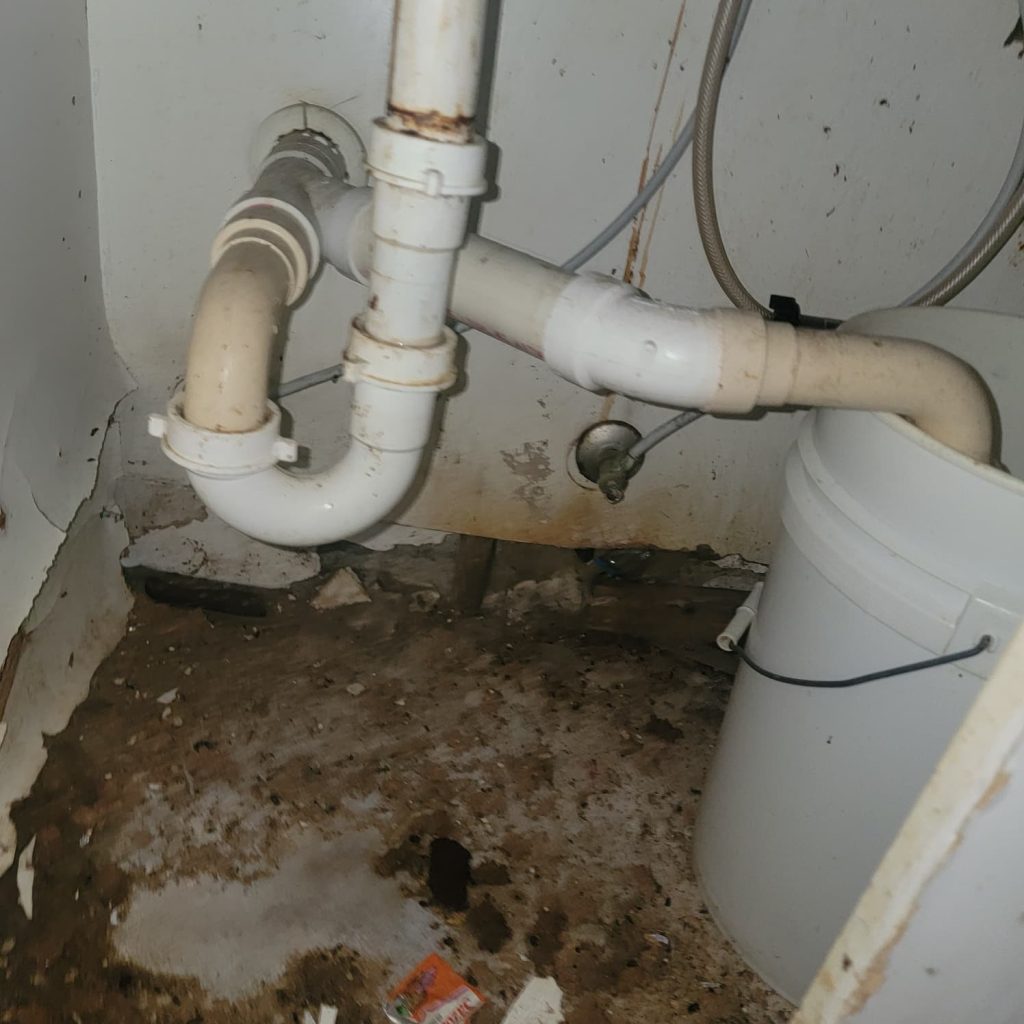
One bang won’t flood your house. The problem is repetition: that shock wave hits the same joints, fittings, and valves hundreds of times a year. It works soldered and threaded connections loose, batters washing machine hoses and toilet fill valves, and stresses the connections at your water heater. The leak that shows up “out of nowhere” behind a wall or under a sink has often been getting hammered for a long time first. The photo under the sink at the top of this post is the kind of spot I mean — supply lines and valves tucked in a cabinet, quietly taking every hit, where a small leak can run a long time before anybody notices.
This is also where I draw the line I always draw: a bang you can hear through the wall, pressure that’s out of range, or any fitting that’s started to weep is licensed-plumber work, not a weekend experiment — I laid out where that line sits in plumber vs. handyman.
How we stop it — in the right order
First, check and correct the pressure. If the house needs a pressure-reducing valve — or the one it has has failed — that gets handled before anything else. Second, secure the pipes that are moving. Third, restore the cushion: drain the system to recharge old air chambers where that’s the setup, or install or replace mechanical water hammer arrestors at the fixtures that close fast, starting with the laundry. Fourth, replace any valve or fitting the hammer has already damaged, instead of waiting for it to let go.
Done in that order, the bang goes away and stays away. Done out of order — arrestors bolted onto a house running 110 psi — and you’ll be hearing it again by next season.
If it helps the planning: financing is available through Acorn Finance — small jobs from $120/month, typical projects in the low $200s–$300s/month, with rates as low as 4.49% APR — always with approved credit.*
FAQ
Is water hammer dangerous, or just annoying? The noise itself is annoying; what it does over time isn’t. Repeated pressure shocks loosen joints and wear out valves and appliance connections, and the failures they cause — a burst washer hose, a leaking fitting inside a wall — are where the real damage and the real bills live. Treat a regular bang as an early warning you’re lucky to get.
Why does it only bang when the washing machine runs? Because the machine’s valve snaps shut faster than any faucet in the house. That sudden stop is exactly what creates the pressure wave. Laundry hammer usually means the arrestor at the machine has failed or was never there — and it’s the most common version of this problem I get called about.
Can I fix water hammer myself? You can check one thing safely: if your home has older air chambers, shutting off the main, opening faucets to drain the system, then refilling can restore the air cushion for a while. If the bang comes back — or your pressure is high, a pipe is visibly moving, or anything is leaking — that’s the point to call a licensed plumber. Don’t open walls or cut lines chasing a noise.
My pipes tick or whistle instead of banging. Is that the same thing? No, and the difference tells you the cause. Ticking is usually a pipe expanding and rubbing as hot water runs through it. Whistling points to a worn valve or a partially closed stop. Banging right at shut-off is water hammer. Each one has a different fix, which is why the sound matters.
Tired of the bang?
Next time it thumps, note what just shut off — then call me and tell me. Free estimate, honest diagnosis: I’ll check your pressure first, find what’s actually causing it, and fix it in the order that makes it stay fixed. Onel Construction LLC — Florida Certified General Contractor CGC1511492, serving Palm Beach, Broward, and Miami-Dade counties.
Call me: (561) 462-9293 — or send the details through our contact page and I’ll get you scheduled.
*Price note in my own words: financing payments and any figures here are examples from recent jobs around here — set before the latest round of tariff-driven material price increases. They move with inflation, tariffs, and the market. Your free estimate always uses current numbers.
Financing is available on everything we do. Payments start at $120 a month on smaller jobs, and most projects land in the low $200s to $300s a month with approved credit. Rates run as low as 4.49% APR for qualified buyers. Ask at the free measure and we’ll lay the options out in writing, next to the estimate.
Insurance savings vary by carrier, policy, and home — figures shown are ‘up to’ amounts, not guarantees. Grant eligibility, amounts, and funding availability are determined by the program and may change. Financing subject to lender approval; rates and payments vary by credit profile. All financing examples assume approved credit through our financing partner.