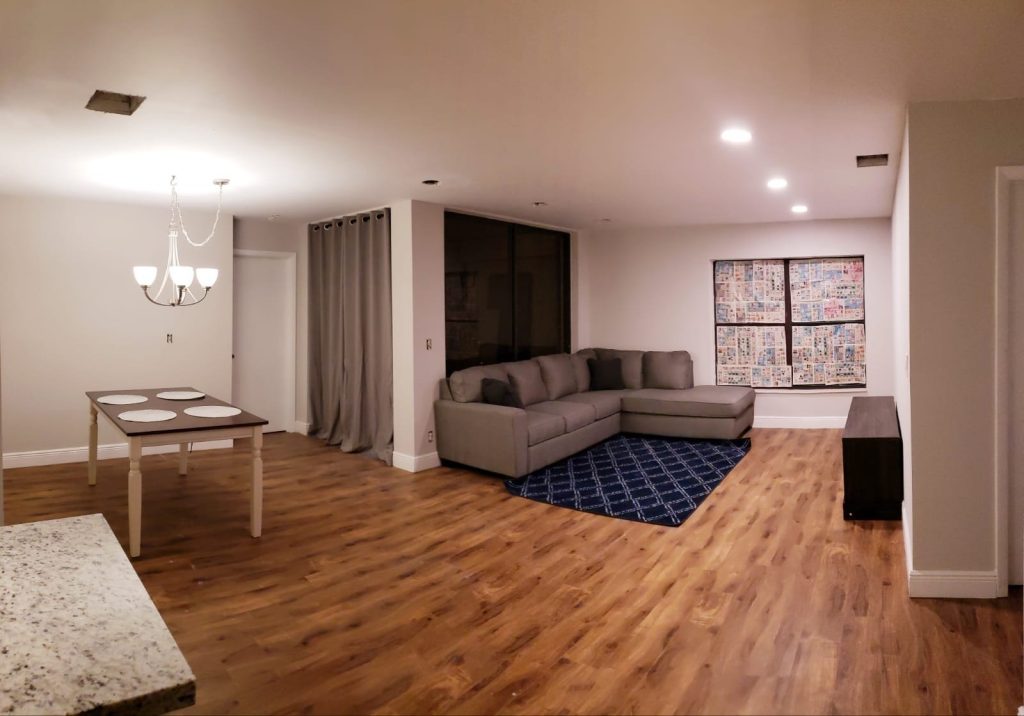
Four hours. One service elevator. Five thousand pounds of construction materials that had to be upstairs before the window slammed shut.
That was the job before the job. In a house, you back the truck up, open the doors, and carry everything in. Nobody times you. Nobody fines you. A condo in South Florida is a different world. The building sets the rules, the HOA sets the window, and the window on this one was strict: four hours on a single service elevator, shared with an entire building of residents who did not ask for a remodel to move in next door.
When that window closes, the elevator goes back to the building. If your materials are still downstairs when it does, your remodel does not start late. It does not start.
The math nobody sees
Five thousand pounds sounds like one number. It is not. It is a stack of smaller problems wearing a trench coat.
No service elevator takes 5,000 pounds in one ride. Every load has a limit, so the real number on a job like this is not the weight — it is the trips. Every trip is a cycle: load downstairs, ride up, unload, ride back down. Each cycle eats minutes you cannot buy back, and the HOA clock does not pause for a held door or a resident stepping into the car you were counting on.
Then there is the order. What the crew needs first cannot be buried behind what they need last. A load that arrives in the wrong order is not progress — it is a pile in the wrong place that somebody has to move twice. In a tight condo unit, there is barely room to move it once.
Homeowners see the finished room. They never see the planning that got five thousand pounds through a single elevator shaft, in the right order, inside a window measured in hours.
How a move like this goes wrong
I have seen three ways this day usually dies, and none of them look dramatic at the start.
The first is showing up and figuring it out live. No sequence, no staging, no plan — just a truck, a crew, and hope. Hope runs out around the second hour, when the loads are out of order, the elevator time is half gone, and the heaviest material is still on the ground floor.
The second is loading by convenience instead of by need. Whatever sits closest to the truck door goes up first. It feels fast. It is not. Upstairs, the crew ends up digging through what arrived to find what they actually need, while the material that matters most takes the last, most rushed rides of the day — if it makes them at all.
The third is burning the window on friction: an unprotected cab the building flags mid-move, material staged where residents have to step around it, a whole crew riding up and down together because nobody assigned who loads, who rides, and who receives. Small leaks. Four hours cannot afford small leaks.
None of those failures are about strength. You cannot muscle 5,000 pounds past a clock. You can only out-plan it.
How we ran it
So we planned it like the four hours were the whole job — because they were.
Before move day, the load was broken down in advance: what goes up, in what order, grouped so each elevator ride carried material the crew upstairs could use the moment it landed. Heaviest and most-needed first, while the window was wide and nobody was rushed. Nothing left to a game-time decision that the clock would make for us.
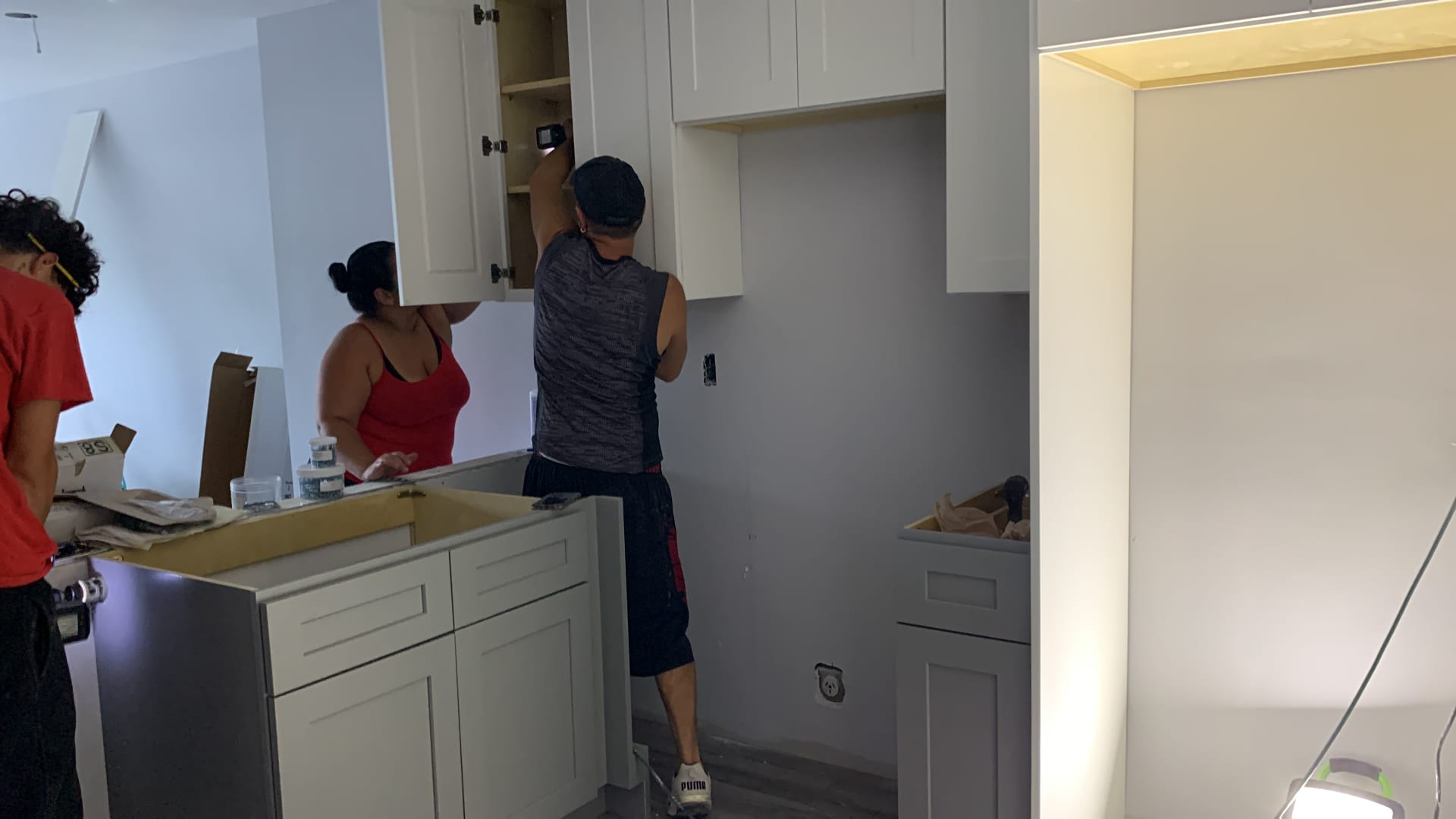
On the day, the crew ran in stations. Loaders downstairs kept the elevator fed — no car ever waited empty on a load that was not ready. Receivers upstairs took each load off, staged it inside the unit in working order, and sent the car straight back down. The path stayed protected and clear, the count stayed honest, and nobody — nobody — freelanced the sequence because a different box looked closer.
That discipline is the invisible half of our interior renovations work. The finished rooms on our projects page all started as a pile of weight somewhere it did not belong. Getting it where it belongs — on time, in order, without the building at war with the job — is the job.
Trip after trip, the pile downstairs shrank and the material upstairs grew in exactly the order the work would consume it. No end-of-window scramble. No begging the building for time we had not earned.
The result
Done — with minutes to spare.
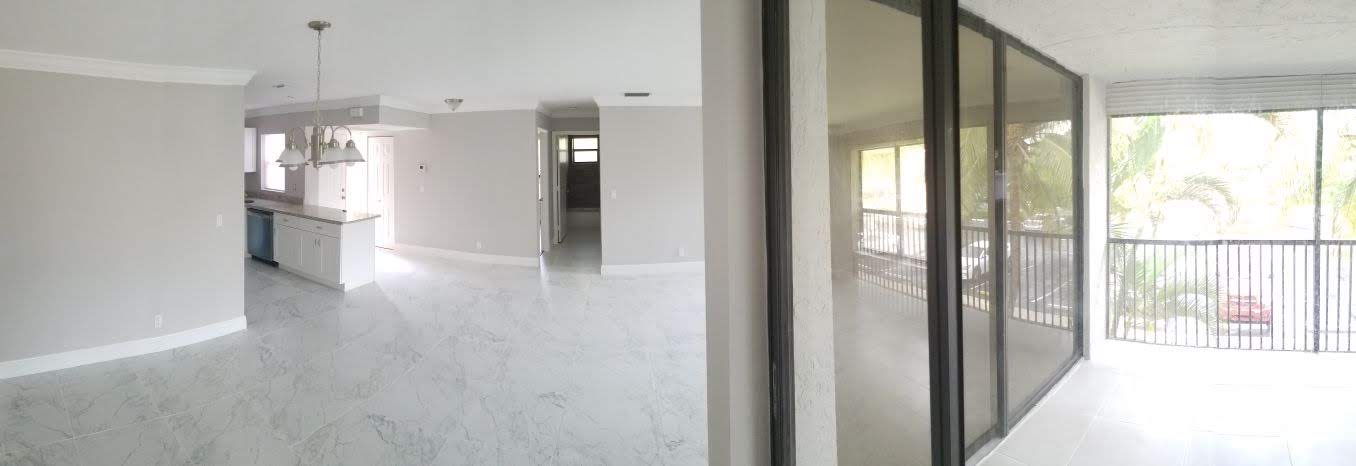
All 5,000 pounds upstairs, inside the strict four-hour HOA window, through the building’s one service elevator, with the material staged in the order the crew needed it. Minutes to spare sounds close. It was not luck. It was the plan holding under a clock that does not negotiate, in a building that does not make exceptions.
That is what flawless logistics looks like from the outside: boring. No deadline drama, no confrontation with management, no call to a homeowner that move day failed. The drama is in what would have happened without the plan — and I would rather my clients never find out.
A condo remodel is won or lost before the first tool ever turns on. Sometimes it is won in an elevator, four hours at a time.
Your turn
Planning a condo remodel in South Florida — or staring at your building’s rules wondering how the work even gets upstairs? Get that part right first. Call or text me at (561) 462-9293 for a free estimate, and we will walk your building’s window, elevator, and rules before we talk finishes. Reach us through our contact page too.
Onel Construction LLC — Florida Certified General Contractor CGC1511492. Licensed and insured, serving Boca Raton and a 75-mile radius — West Palm Beach to Miami.
Insurance savings vary by carrier, policy, and home — figures shown are “up to” amounts, not guarantees. Grant eligibility, amounts, and funding availability are determined by the program and may change. Financing subject to lender approval; rates and payments vary by credit profile. All financing examples assume approved credit through our financing partner.