Since July, homeowners have been asking me some version of the same question: “I read Florida passed a law that says I don’t need a permit for work under $7,500 anymore — so we can skip the permit on this job, right?”
I understand why they’re asking. The headlines made HB 803 sound like small projects got a free pass statewide. But here in Palm Beach County, that’s not how it landed. The county’s own Building Division put out a notice when the law took effect, and its answer is clear: the exemption does not apply here, and the permit rules are the same as they’ve always been. Here’s the whole picture, because getting this wrong is expensive.
Key takeaways
- HB 803, effective July 1, 2026, exempts some single-family home work valued under $7,500 from needing a building permit — cosmetic, non-structural jobs like interior painting, replacing flooring, or replacing cabinets.
- The law excludes property in a flood hazard area. Palm Beach County’s Building Division says the entire county is designated a flood hazard area under the Florida Building Code — so the exemption does not apply within Palm Beach County.
- Even where the exemption can apply, trade work — structural, electrical, plumbing, mechanical, and gas — needs a permit at any price.
- The exemption is never automatic: the owner or contractor has to send the building department a written exemption request and get a decision before work starts.
- In Palm Beach County, current permit requirements remain unchanged — the county’s own words. When we do the job, pulling the permit is part of it.
What HB 803 actually says
The law tells local building departments to exempt the owner of a single-family home — or the owner’s contractor — from a building permit for work valued at less than $7,500. But every one of these conditions has to be true at the same time:
- Single-family home. The exemption is written for single-family dwellings.
- Under $7,500 — the whole job. You can’t split one project into smaller pieces to stay under the limit. City guidance is explicit on that.
- No trade work. Structural, electrical, plumbing, mechanical, and gas work is not exempt at any price.
- Not in a flood hazard area. If the property sits partly or fully in a flood hazard area as the Florida Building Code defines it, it doesn’t qualify.
- Approved in advance. A written exemption request, with the contract or other documentation, goes to the building department — and work doesn’t start until they decide.
That’s a much narrower law than the headlines suggested. And the fourth condition is the one that decides it for us locally.
Why Palm Beach County is different
Palm Beach County’s Planning, Zoning & Building Department addressed HB 803 head-on in a notice to residents and construction partners. Its position: the exemptions do not apply within Palm Beach County, because the law excludes flood hazard areas and all of Palm Beach County is designated as a flood hazard area under the Florida Building Code. The notice closes with the line that matters — current permit requirements remain unchanged in Palm Beach County. It’s signed by the county’s Building Official, and the Building Division takes questions at 561-233-5100.
A few cities inside the county, like West Palm Beach and Boynton Beach, built exemption-request processes — but both list flood hazard areas as not eligible, which is the same answer by another route. And if you’re in Boca Raton or Delray Beach, where most of our work is, don’t assume your city’s building division reads it any differently: ask before you start, or let us ask for you as part of the job. I wrote about the other half of this — whose name belongs on a permit, and why it matters — because the permit isn’t paperwork for its own sake. It’s the record that the work was done legally and inspected.
What still needs a permit at any price
Anywhere in Florida, exempt or not, these need permits regardless of what the job costs:
- Electrical — new circuits, moving outlets, adding lighting.
- Plumbing — moving a sink, relocating washer hookups, shower work.
- Mechanical and gas — HVAC work, gas lines, venting changes.
- Structural — removing or adding walls, enclosing a space, changing openings.
Fences and driveways can also run through zoning rules the law doesn’t touch, and HOA approval rules apply whether or not a permit is needed.
What this means for the small jobs people call us about
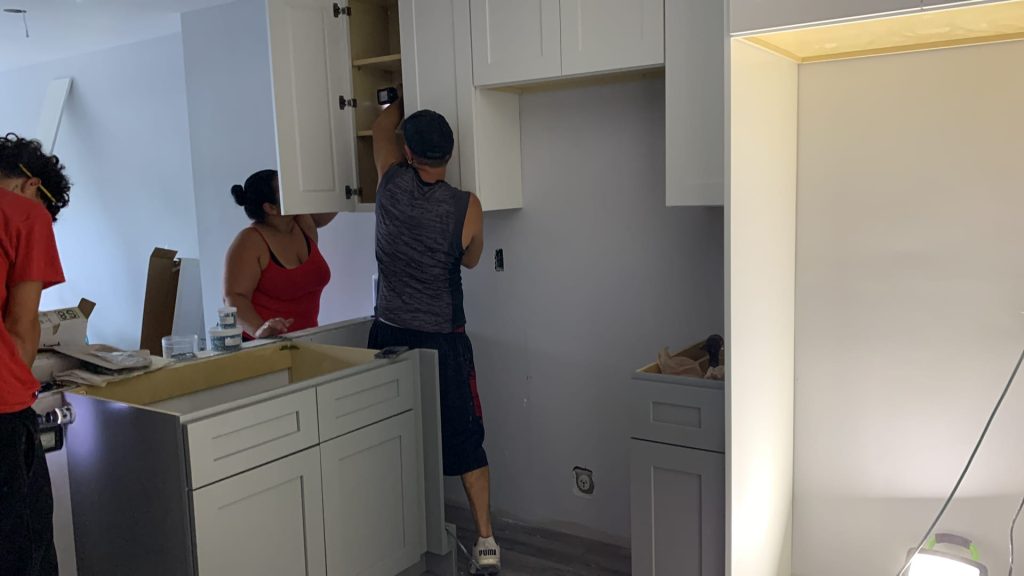
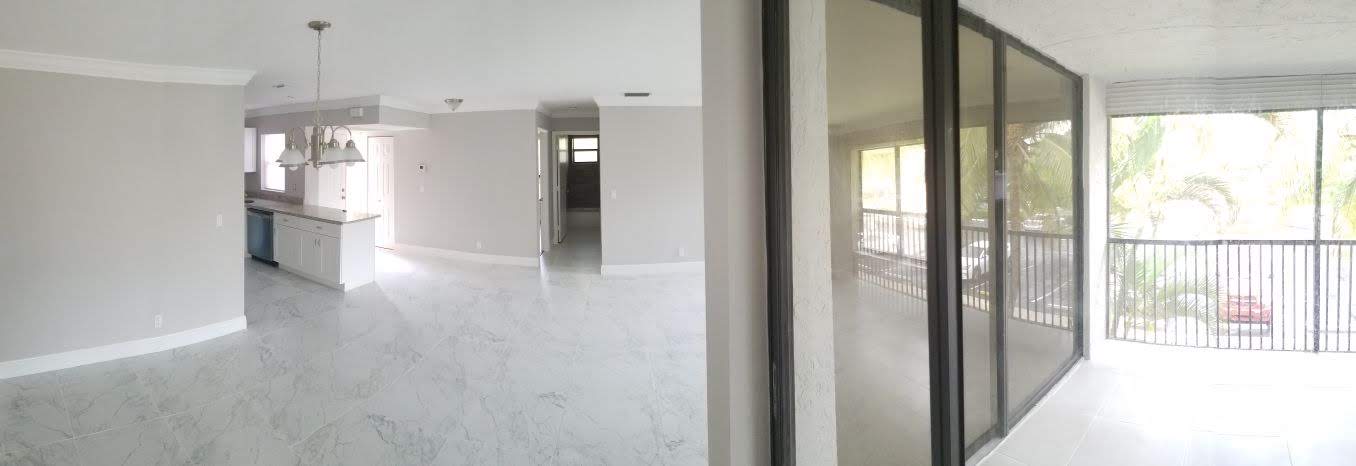
The frustrating part is that the projects homeowners ask us about most — new floors, fresh paint, a cabinet swap — are exactly the “small jobs” HB 803 was talking about. Our flooring work and kitchen cabinet work live right in that under-$7,500 conversation. In Palm Beach County, don’t count on skipping the permit process for them.
Work done without a required permit costs more later than the permit ever would. West Palm Beach’s published guidance puts the penalty for unpermitted work that needed a permit at four times the regular permit fee — and unpermitted work has a way of surfacing at the worst times: when you sell, when you refinance, or when an insurer asks questions after a claim.
And if the budget is what’s really driving the permit question, there are honest ways to handle that too. Most small projects we do can be financed — small jobs from $120/month, typical projects in the low $200s–$300s/month, with approved credit, at rates as low as 4.49% APR with approved credit through our financing partner. A permitted job on a payment plan beats an unpermitted job that saves a few hundred dollars and buys you a problem.*
Our rule of thumb
- In Palm Beach County, assume a permit is needed unless your building division tells you in writing that it isn’t.
- Look at the whole scope, not just the price. The moment a job touches electrical, plumbing, gas, mechanical, or structure, it’s a permitted job.
- Hire a contractor who handles the permit as part of the job — and who puts his own name and license on it.
- Check your HOA rules before you order materials, permit or no permit.
Not sure whether your project needs a permit? Ask before anyone starts
Call or text me at (561) 462-9293 (call/text), or reach us through our contact page. Tell me the job and what you’ve heard about the exemption, and I’ll tell you straight what it needs. If we do the work, the permit is handled as part of the job — you won’t be standing in line at the building department, and you won’t be guessing about a law the county has already answered.
Onel Construction LLC — a licensed Florida general contracting firm (CGC1511492). Licensed and insured, serving Boca Raton and a 75-mile radius — West Palm Beach to Miami.
This article is general information about permit rules, not legal advice. Permit requirements can change; confirm your project’s requirements with your local building division before starting work.
*Prices are averages from recent jobs, set before the latest round of tariff-driven material price increases, and subject to change with inflation, tariffs, and market conditions. Your free estimate always uses current numbers.
FAQ
Do I need a permit to replace flooring in Boca Raton?
Don’t assume the HB 803 exemption covers it. Palm Beach County’s position is that the exemption doesn’t apply anywhere in the county because of the flood hazard area designation. If the job also involves electrical or plumbing work, a permit is required regardless. Ask the City of Boca Raton’s building division — or call us and we’ll tell you what your specific job needs.
Can I split my project into smaller jobs to stay under $7,500?
No. City guidance, including West Palm Beach and Boynton Beach, says a project can’t be divided into smaller projects to stay under the limit. The value that counts is the value of the whole job.
Does HB 803 apply to condos or townhomes?
The $7,500 exemption is written for single-family dwellings. If you live in a condo or townhome, check with your building division and your association before starting work — and remember that association approval rules apply either way.
My home isn’t in a FEMA flood zone. Does the exemption apply to me?
Not in Palm Beach County, based on the county’s notice. The county isn’t going by your insurance flood map — it says the flood hazard area designation under the Florida Building Code covers the entire county. If you want that confirmed for your address, the county Building Division takes questions at 561-233-5100.
Insurance savings vary by carrier, policy, and home — figures shown are ‘up to’ amounts, not guarantees. Grant eligibility, amounts, and funding availability are determined by the program and may change. Financing subject to lender approval; rates and payments vary by credit profile. All financing examples assume approved credit through our financing partner.