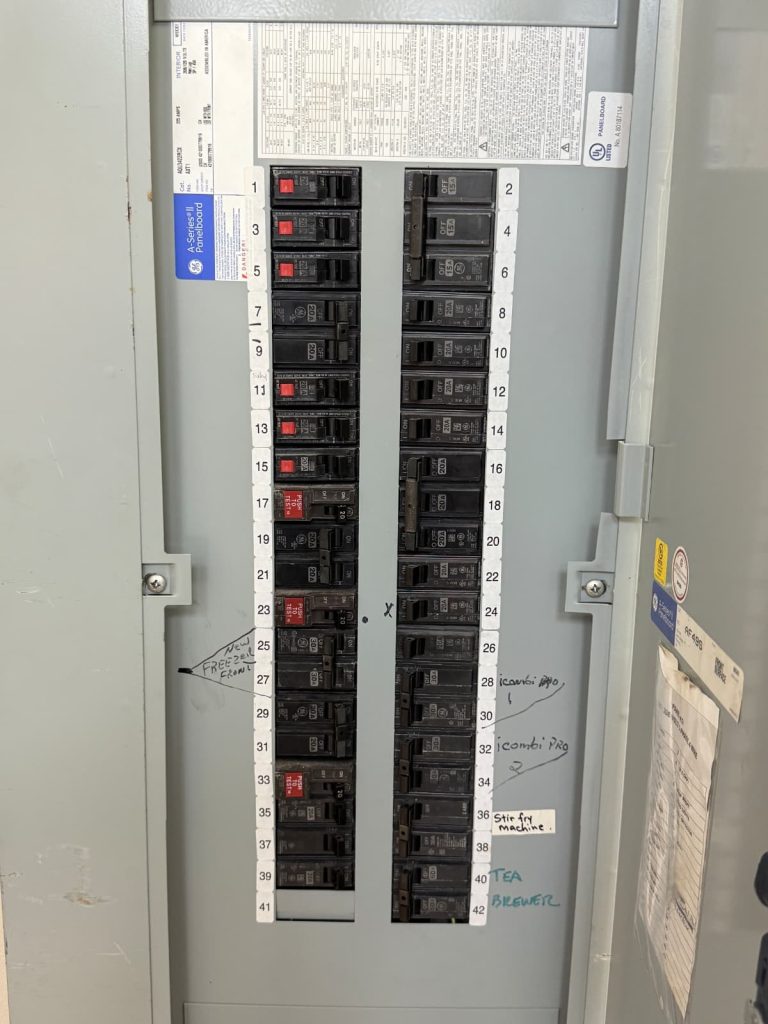
Short answer: if you’re adding big electrical loads, tripping breakers when normal appliances run together, or planning a remodel, an EV charger, or a tankless water heater — probably yes. If none of that is happening, your 100-amp panel may still be doing its job fine. I’m Joe, I run Onel Construction out of Boca Raton, and this is the honest math I walk homeowners through before anybody spends a dollar on a bigger panel.
Key takeaways
- 200 amps is about capacity, not bragging rights. It lets your home run modern loads — AC, electric range, dryer, water heater, pool equipment, and an EV charger — without living on a breaker’s edge.
- The real test is a load calculation, not the age of the panel alone. A licensed electrician adds up what your home actually draws and what you plan to add.
- Clear upgrade signs: breakers that trip when the AC and dryer run together, a panel that’s full with no room for a new circuit, flickering under load, or a planned addition, remodel, or EV charger.
- 100 amps can still be enough for a smaller home with gas appliances, no pool, no EV, and no remodel planned — don’t let anyone sell you capacity you don’t need.
- A panel upgrade in Florida needs a permit, utility coordination, and a passed inspection — that paperwork is part of the job, not an extra.
Start with the load, not the label
A 100-amp panel was plenty for the house most South Florida homes used to be: smaller AC, fewer electronics, no car charging in the garage. The house changed. Now I walk in and count an electric range, a dryer, a tankless or large tank water heater, a pool pump and heater, and a homeowner asking where the EV charger goes. None of those loads is unreasonable. Together, they can push a 100-amp service past comfortable.
That’s why the first step on any panel job we handle through our electrical work in Boca Raton is a load calculation. We add the square-footage load, the big fixed appliances, and anything you’re planning to add in the next few years. The number that comes out — not a sales pitch — decides whether 200 amps is a need or a nice-to-have.
The signs you’re out of room
Breakers that trip when two normal things run at once are your panel talking to you. So is a box that’s physically full — every slot taken, tandem breakers doubled up to squeeze in one more circuit. Flickering lights when the AC kicks on, a buzzing panel, or warmth on breakers are more serious, and those move the conversation from capacity to safety.
Timing matters too. If you’re about to remodel a kitchen, add a laundry room, build an addition, or install an EV charger, price the panel question now, while walls and permits are already in motion. Doing it mid-project, after an inspector or an electrician flags it, costs more and slows everything down. If your concern is age or a flagged brand rather than capacity, I covered those warning signs separately in my post on how to tell if a panel needs replacing — different question, different answer.
When 100 amps is still enough
Here’s the part a lot of companies skip: plenty of 100-amp homes are fine. A smaller home with a gas range and gas dryer, no pool heater, no EV on the way, and breakers that never trip does not need a bigger panel just because 200 is the modern standard. Spend that money on something your house actually needs.
I’ll also say this plainly — a new panel does not fix every electrical complaint. A single tripping circuit can be a bad breaker, an overloaded outlet run, or a failing appliance. A good electrician finds the actual cause before quoting you a service upgrade. If the load calculation says you’re comfortably under capacity, I’ll tell you that and leave your panel alone.
What the upgrade itself involves
Going to 200 amps is more than swapping a box. It can mean a new panel, a heavier service entrance, meter-side work coordinated with FPL or your utility, grounding brought up to current code, and every circuit reconnected, labeled, and tested. As I explained in my post on whether a panel replacement needs a permit in Florida, the permit and inspection are required — the closed permit is the record your insurer or a future buyer will ask for.
Most straightforward upgrades are planned around a scheduled power-off window for the changeover, with the inspection after. I broke down the numbers in what an electrical panel upgrade costs in South Florida — as a planning figure, most 100-to-200-amp upgrades around here land in the $1,500–$3,500 range depending on service work and condition.* If financing helps, small jobs start at $120/month and typical projects land in the low $200s–$300s/month with approved credit, at rates as low as 4.49% APR with approved credit through Acorn Finance.
Not sure which side of the line your house is on?
Call me at (561) 462-9293 or reach me at https://onelconstruction.com/contact-us/ — I’ll look at your panel, run the load math honestly, and tell you in writing whether you need 200 amps, need a repair, or need nothing at all. Free estimate, straight answer.
Financing is available on everything we do. Payments start at $120 a month on smaller jobs, and most projects land in the low $200s to $300s a month with approved credit. Rates run as low as 4.49% APR with approved credit. Ask at the free measure and we’ll lay the options out in writing, next to the estimate.
— Joe, Onel Construction LLC, License CGC1511492, Boca Raton, FL
Prices are averages from recent jobs, set before the latest round of tariff-driven material price increases, and subject to change with inflation, tariffs, and market conditions. Your free estimate always uses current numbers.
FAQ
Q: Can I add an EV charger on a 100-amp panel?
A: Sometimes — it depends on your load calculation. If your home’s existing load leaves enough headroom, a charger may fit, possibly with load management. If you’re already near capacity, the charger is usually the load that makes the 200-amp upgrade the right call. Don’t guess; the math takes minutes.
Q: Does a 200-amp upgrade raise my electric bill?
A: No. Amperage is capacity, not consumption. You pay for the electricity you use, not the size of the panel it flows through. A bigger panel just lets more things run at the same time without tripping breakers.
Q: Will a new 200-amp panel help with insurance?
A: It can help your documentation. Insurers look hard at older and flagged panels on four-point inspections, and a new panel installed under a closed permit with a passed inspection is exactly the record they ask for. No contractor can promise a specific premium change — that is up to your carrier and policy.
Q: Can I just add a subpanel instead of upgrading to 200 amps?
A: A subpanel adds spaces, not capacity. If your breakers trip because the box is full but your total load is low, a subpanel may solve it. If your total load is the problem, only a service upgrade adds real headroom. The load calculation tells you which problem you have.
Insurance savings vary by carrier, policy, and home — figures shown are ‘up to’ amounts, not guarantees. Grant eligibility, amounts, and funding availability are determined by the program and may change. Financing subject to lender approval; rates and payments vary by credit profile. All financing examples assume approved credit through our financing partner.